One of the most powerful aspects of real communication goes beyond correctness: intensity.

When learning English, many students focus on vocabulary and grammar rules. However, one of the most powerful aspects of real communication goes beyond correctness: intensity.
Intensity is how English speakers express emphasis, emotion, surprise or strength of feeling. Understanding how intensity works helps learners sound more natural, precise and confident, especially at B2 level, where nuance and intention become essential.
In everyday English, speakers constantly adjust intensity to show enthusiasm, soften opinions, express surprise or connect emotionally with others. This means intensity is closely linked to pragmatics — how language is used in context — not just to grammatical accuracy.
A sentence can be grammatically correct and still sound flat or unnatural if intensity is missing or misplaced.
-
Intensifiers
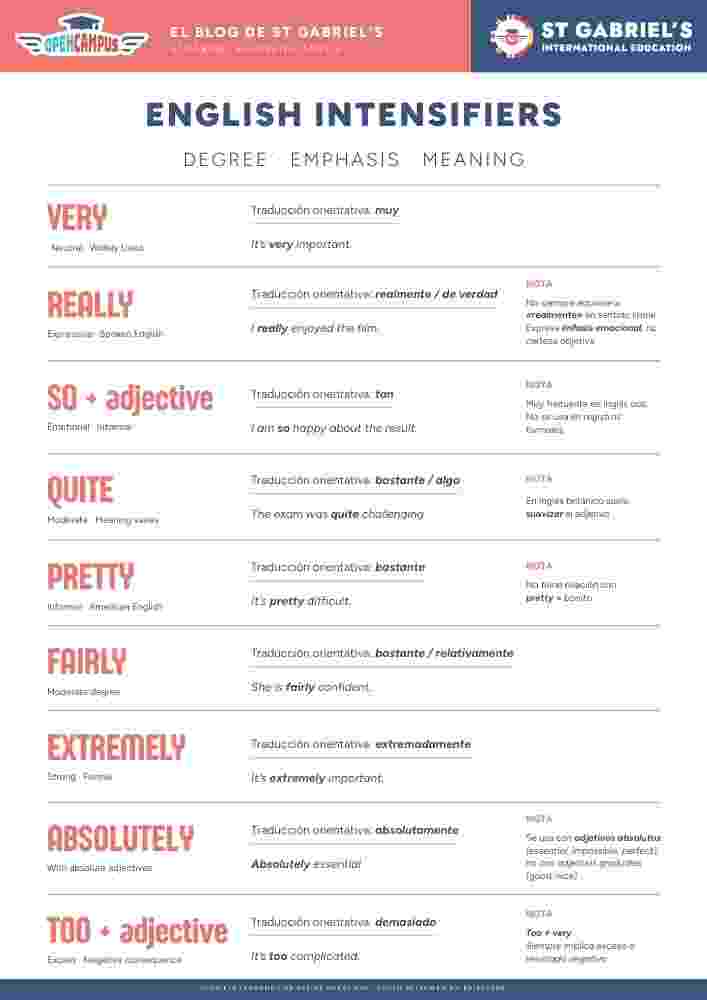
Words such as very, really, so, quite, extremely or absolutely modify adjectives and adverbs to add emphasis. At B2 level, learners are expected to choose intensifiers appropriately according to register and intention.
-
Sentence structure and emphasis
Word order, repetition and short emphatic sentences contribute to intensity. Compare:
-
It was interesting.
It was really interesting.
It was interesting — really interesting.
-
Intonation and spoken emphasis
In spoken English, stress and intonation play a key role. The same words can express enthusiasm, irony or disappointment depending on how they are said.
Sound more natural and fluent
Avoid misunderstandings
Express opinions clearly
Communicate emotions appropriately
Sound more natural and fluent
Avoid misunderstandings
Express opinions clearly
Communicate emotions appropriately
Intensity should not be taught as an isolated grammar point. It works best when introduced through real contexts, meaningful examples and reflection on intention and emotion.
English is not a flat language. It is rich in nuance and emotional shading.
Grammar matters, but understanding how to express intensity allows learners to communicate with clarity, confidence and authenticity.