


OPEN CAMPUS

ST. GABRIEL'S BLOG

MEETHODOLOGY

Learning languages through play: why play is key in the language classroom

Discover why learning languages through play is key to language acquisition. Learn about practical strategies and methodologies for the language classroom.

By Laura Domínguez
Translated by Morgan Campbell
aprender idiomas jugando

In the context of foreign language teaching, play cannot merely be understood as a secondary or motivational element. On the contrary, it forms a key means for language acquisition, especially at an early age.

In St. Gabriel’s classrooms, play is integrated as a structural part of the learning process, allowing students to build meaning through experience.

A real-life classroom situation

Alicia is five years old. During the lesson, she has participated in songs and guided activities using flashcards. She appears engaged and motivated. Now comes a key moment: the opportunity for free play.

Alicia sits on the floor and begins to use the cards. She doesn’t follow any apparent order. She pauses, observes, and tries to recall words. Shortly after, a classmate approaches her. Spontaneously, they both begin to construct a story, helping each other to remember vocabulary and correcting one another.

This type of interaction, seemingly informal, activates complex linguistic processes: lexical retrieval, negotiation of meaning, oral production, and self-regulation.

What do we mean by play?

From a pedagogical perspective, play presents a series of characteristics that differentiate it from other activities:
  • It arises from intrinsic motivation, unrelated to external rewards.

  • It involves active participation at a cognitive and physical level.

  • It is voluntary and flexible in its development.

  • It enables the reinterpretation of reality and the construction of personal meanings.

  • It creates a positive emotional context that favours learning.

When these conditions are met, play becomes an optimal environment for language acquisition.

Play as the context for acquisition

Various methodological approaches agree that meaningful learning occurs when students can relate new content to prior experiences within relevant contexts.

In this sense, the game facilitates:

The connection between prior knowledge and new linguistic input.

The spontaneous use of language in real communicative situations.

The lowering of the affective filter, reducing the fear of making a mistake.

The progressive development of fluency.

The role of the teacher, therefore, shifts: it ceases to focus exclusively on the transmission of content to become a designer of contexts and an observer of the process.

Strategies in order to integrate play into the classroom

The following are some proposals applicable to the language classroom:

Provocation

This involves providing students with materials related to the content that is being studied, encouraging them to freely explore and use the material. The teacher intervenes only when necessary, reinforcing language use.

Gamification

Dynamics are proposed with objectives and challenges that require the use of language in order to progress, encouraging cooperation and the practical application of knowledge.

Escape Room

Students must solve a series of linguistic tests to achieve a specific goal, working under pressure and in a team.
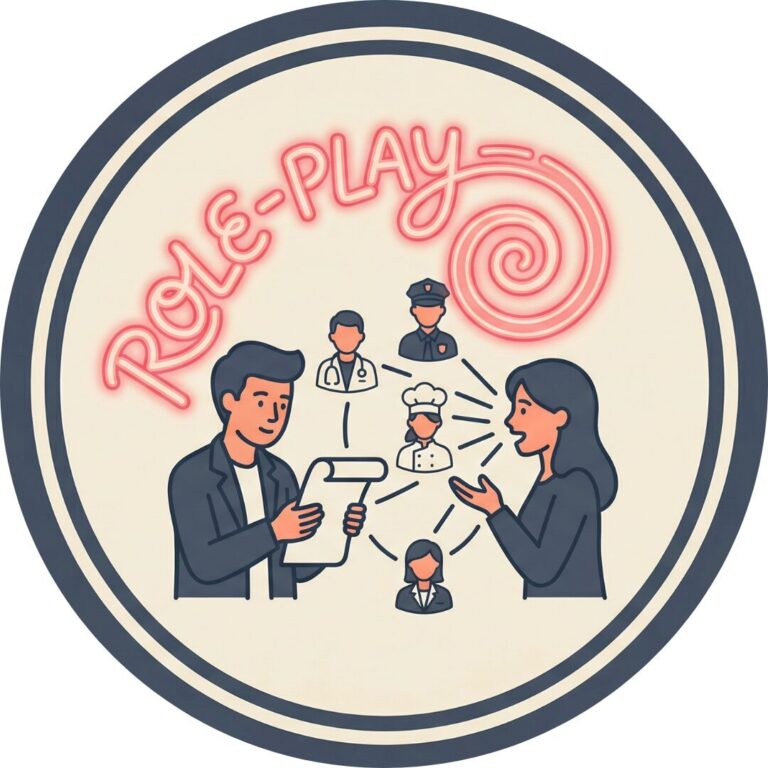
Role-play

Simulated situations are created in which students adopt different roles, using language in meaningful contexts.


A practical example

In a Year 1 (Primary School)  lesson focused on superheroes,  ability verbs and the modal ‘can,’ the activity “The Hero’s Trunk” is proposed.

The classroom is transformed into a symbolic space where students find capes, masks, and cards with actions (run, fly, swim). Through exploration, the teacher introduces language in meaningful contexts:

“Can you fly?”

“You can run fast!”

Before formal instructions, students have already begun to understand and use linguistic structures.

Incorporating games into the classroom does not mean abandoning pedagogical rigour. On the contrary, it requires thoughtful planning and a deep understanding of learning processes.

St. Gabriel’s always uses methodologies in which play allows for the creation of environments where learning occurs naturally, meaningfully, and progressively. In this sense, the teacher’s challenge does not lie solely within teaching content, but in designing experiences that favour its acquisition.

Learning Spanish in Seville or English in Seville, a great experience for everyone.

Author

Picture of Laura Domínguez Pabón

Laura Domínguez Pabón

A nursery school teacher and PhD candidate in Education. She specialises in language teaching and the use of play in the classroom, having completed the Erasmus Mundus Master’s programme: Play, Education, Toys & Languages. A lover of literature, she is the author of the short story *¿Qué significan las miradas?*, published by BABIDI-BÚ. She currently teaches in the English department at St Gabriel’s International.

Translated by

Picture of Morgan Campell

Morgan Campell

Biografía